Blog »
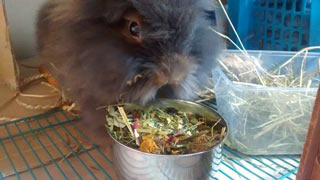
The mane is the reason most people fall for a lionhead. It is also the part that needs the most attention. Loose wool collects around the head and shoulders, and a rabbit that cannot keep up with it will swallow a lot of fur while washing itself. A few minutes with a brush each week solves most of the problem.
How often to brush
For a lionhead with a single mane, a quick brush once a week is usually enough. Double mane rabbits keep a fuller mane for life, so they do better with two or three short sessions a week. During a molt, which happens a few times a year, brush every day. You will notice the wool coming out in clumps and it is much better in your brush than in your rabbit's stomach. If you are not sure which type you have, our page on mane types shows the difference.
What to use
A soft bristle brush or a small slicker brush works well. Work in the direction the fur grows and keep the strokes light. Lionhead skin is thin and it lifts easily, so never pull on a knot. If you find a mat, hold the fur at the base with your fingers and tease it apart with a wide tooth comb. Scissors are risky because it is very easy to cut the skin without noticing. Ask an exotic vet or an experienced breeder to remove anything that will not come out.
Keep the rear end clean
Check the fur under the tail every time you brush. Soft droppings or urine stuck to the wool attract flies in warm weather and can cause skin sores. Spot clean with a damp cloth and dry the area well. Baths are not a good idea, because rabbits get stressed easily and stay wet for a long time.
Wool block and what it looks like
Rabbits cannot vomit, so swallowed fur has to pass all the way through. When the gut slows down, the wool can form a mass that stops food moving. Warning signs are small or missing droppings, a hunched posture, teeth grinding and no interest in hay or pellets. If your rabbit has not eaten or produced droppings for about twelve hours, call a vet who treats rabbits the same day. Waiting a day can make the situation much worse.
Hay is the best prevention, because the long fiber keeps the gut moving. Make sure your lionhead always has fresh hay available, and read our notes on daily care and health concerns for more on routines that keep the digestive system healthy.
Nails and a quick check
Grooming time is also a good moment to trim nails every four to six weeks and look over the eyes, ears and teeth. Small changes are easy to spot when you handle your rabbit on a regular schedule, and that makes vet visits shorter and cheaper.